
Banks Steal the Spotlight
For much of 2026, the market’s attention has been firmly fixed on AI, semiconductors and anything connected to the massive build-out in computing infrastructure.
In the month of July, it was the local banks that took centre stage.
DBS, OCBC and UOB continued to push higher as investors became increasingly comfortable that the earnings outlook for Singapore banks remains much stronger than many had expected. Earlier fears that failling interest rates would sharply compress margins have gradually faded, while wealth management, fee income and regional capital flows continue to provide additional engines of growth.
What I find particularly interesting is how the investment case for the banks has evolved.
For many years, Singapore banks were often viewed primarily as yield or dividend plays. They are dependable businesses that paid attractive dividends but offered relatively modest growth. Today, that description looks increasingly incomplete.
DBS, OCBC and UOB are becoming important beneficiaries of Singapore’s growing role as a regional financial and wealth-management hub. Rising assets under management, strong fee income and continued inflows of private wealth mean that earnings are becoming less dependent on interest margins alone.
That combination of strong balance sheets, attractive dividends and increasingly diversified earnings has made the banks much more compelling businesses than they were a decade ago.
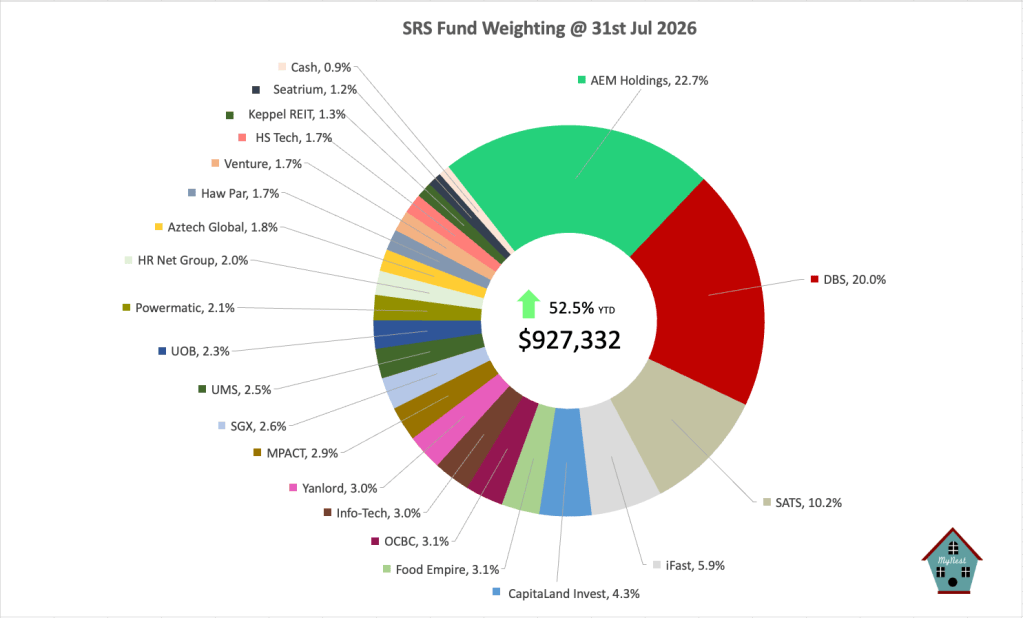
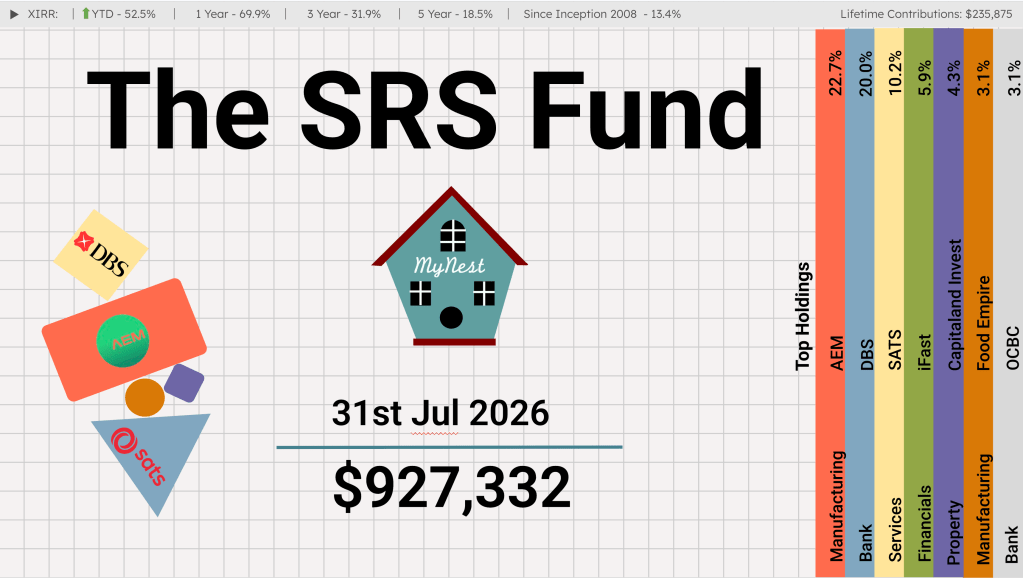
The market appears to be recognising this. Within the SRS Fund, Finance has grown to 34% for the portfolio, retaking its position as the largest sector allocation. DBS alone represent 20%, complemented by OCBC, UOB, SGX and iFast.
Perhaps the most interesting part of July was the contrast. While AI and semiconductor stocks suffered a bout of volatility, the supposedly “boring” banks quietly continued to climb.
It is a useful reminder that market leadership constantly changes. Sometimes the most exciting returns come from the businesses everyone thought were boring.
For the SRS Fund, this was helpful because the Finance segment remains a significant part of the portfolio. DBScontinues to be the second-largest individual holding after AEM Holdings, while OCBC, UOB, SGX and iFast also contributed meaningfully to the overall portfolio structure.
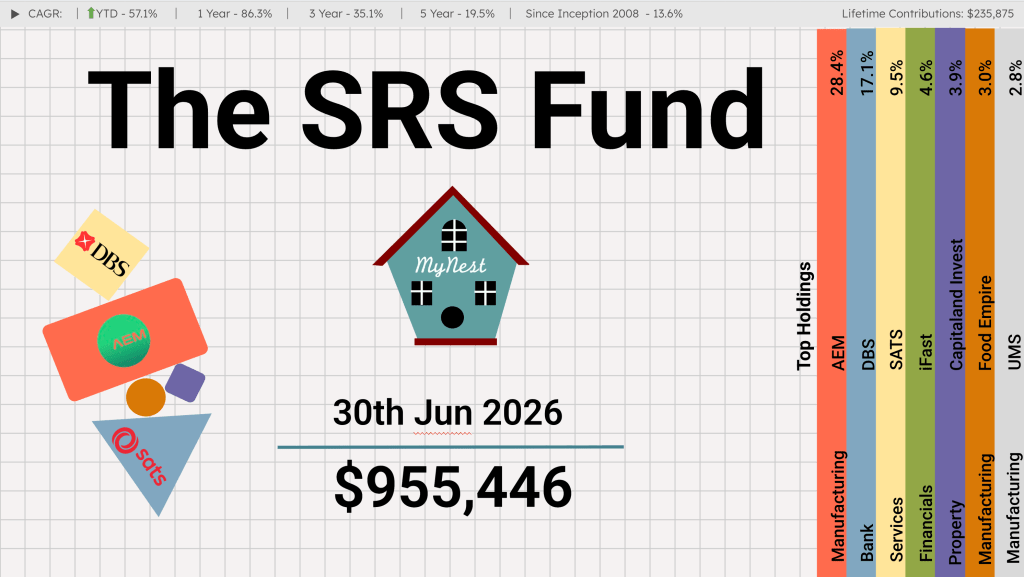
At the same time, the performance of the Fund continues to be strongly influenced by AEM Holdings. While I have already trimmed part of the position and recovered the original capital, AEM remains the Fund’s largest holding at 28.4%.
This concentration has been a major driver of performance, but it also requires continued discipline. A stock can become less risky after the thesis is proven, but more risky if the position size becomes too large relative to the portfolio.
SRS Fund Performance vs. Benchmark
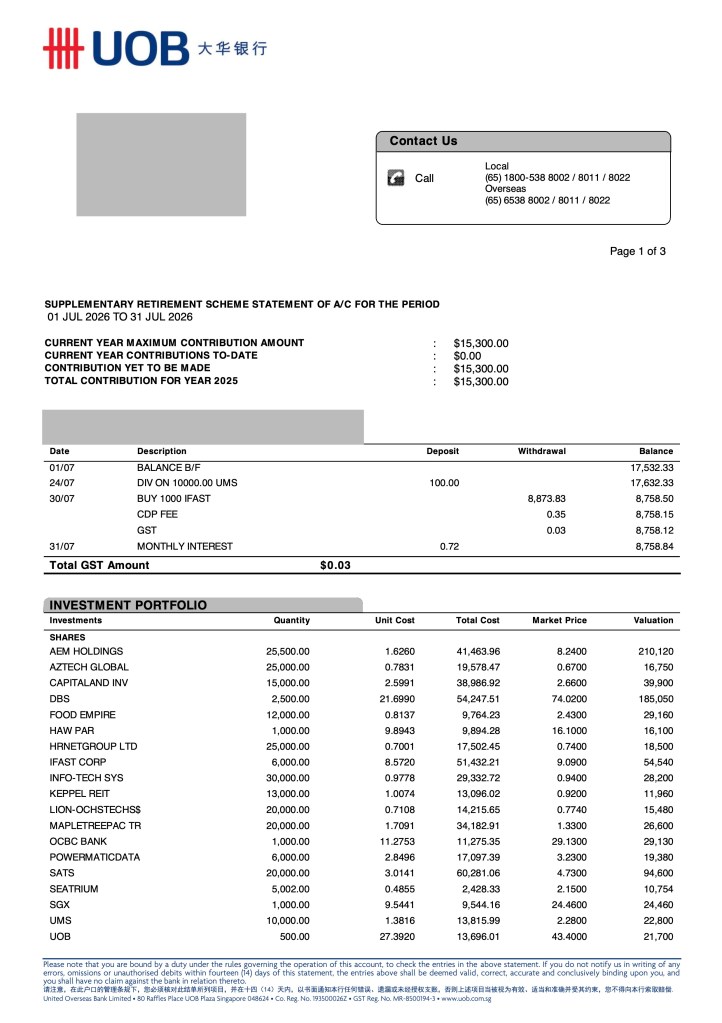
As at 31st Jul 2026, the SRS Fund value stood at $927,332 up 52.5% year-to-date. This is down 2.9% from the month of June.
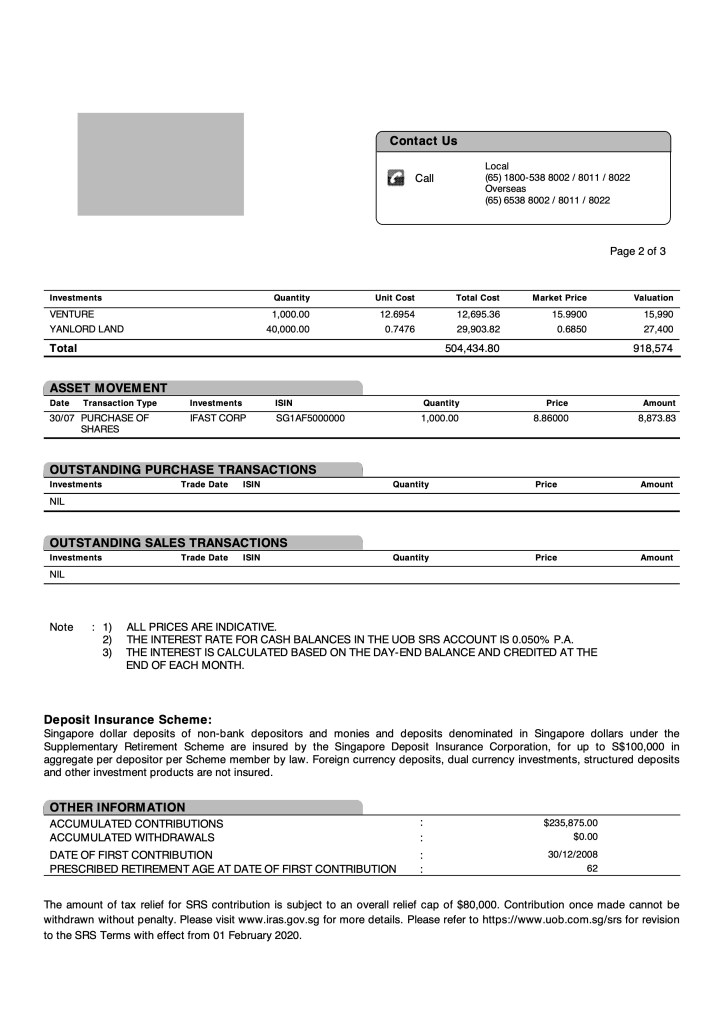
After seeing the SRS Fund rise from approximately half a million in early 2025 towards nearly $1m within a relatively short period, it would be unrealistic to expect the journey to continue without setbacks. Markets rarely move in straight lines.
What matters more is whether the companies owned by the SRS Fund are increasing their intrinsic value over time. On that measure, I remain reasonably comfortable
Performance Comparison
| Metric | The SRS Fund | STI Index (Benchmark) |
| YTD Return (Apr 2026) | +52.5% | ~+21.3% |
| Cash Weighting | 0.9% | N/A |
| Top Holding | AEM Holdings (22.7%) | DBS (~28.7%) |
Portfolio Segments
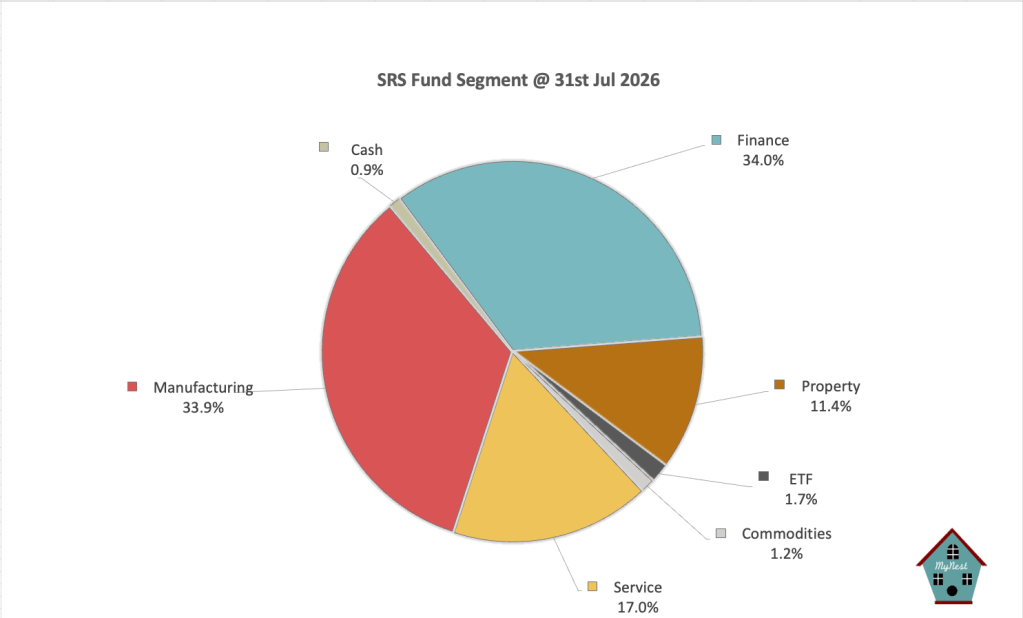
The changing leadership within the portfolio can be seen clearly from the sector allocation.
Finance has retaken the top segment at 34%, up from 28.9% in June.
Manufacturing has fallen to 33.9%, from 40.5% previously, largely reflecting the correction in AEM and other semiconductor-related holdings rather than a major change in portfolio strategy.
AEM and DBS together still account for more than 40% of the SRS Fund. This concentration has played a major part in the SRS Fund’s strong performance, but it remains something I watch carefully.
Dividends
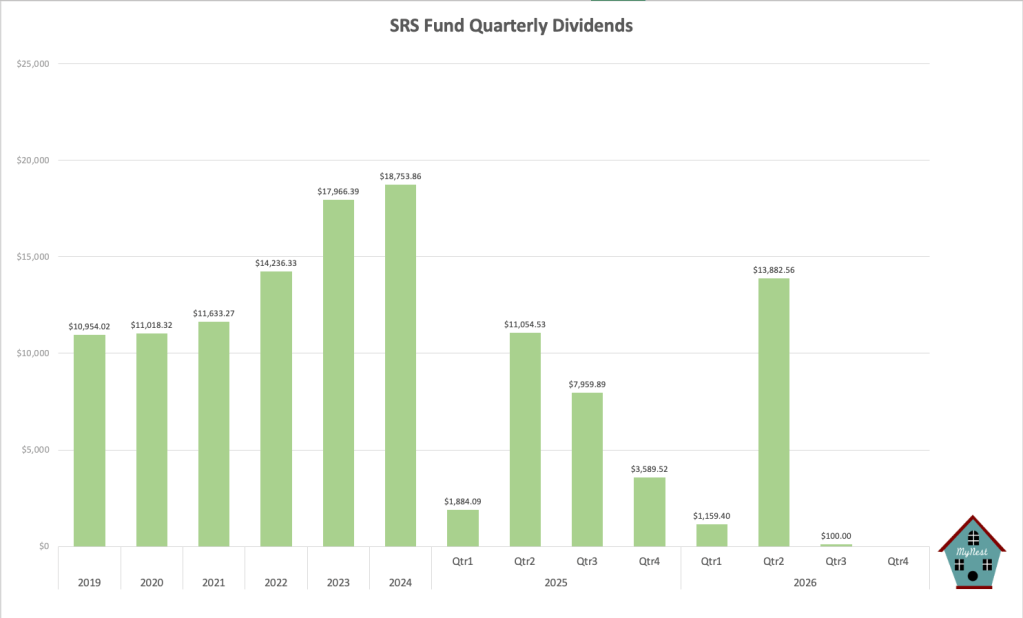
Dividend income for Q3 currently stands at only $100, but July is still the first month of the quarter and therefore the figure is not particularly meaningful yet.
The more important figure remains the $15,041.96 collected during the first half of 2026. This amount is roughly equivalent to the maximum yearly SRS contribution of $15,300 and it signifies that contribution is no longer the main driver for the growth of SRS Fund.
I continue to view dividends as an important secondary benefit of the portfolio rather than the primary objective. The objective remains total return and long term compounding.
However, dividends provide something particularly valuable during volatile periods: tangible evidence that the businesses I own continue generating cash regardless of what their share prices happen to be doing.
SRS Fund Value
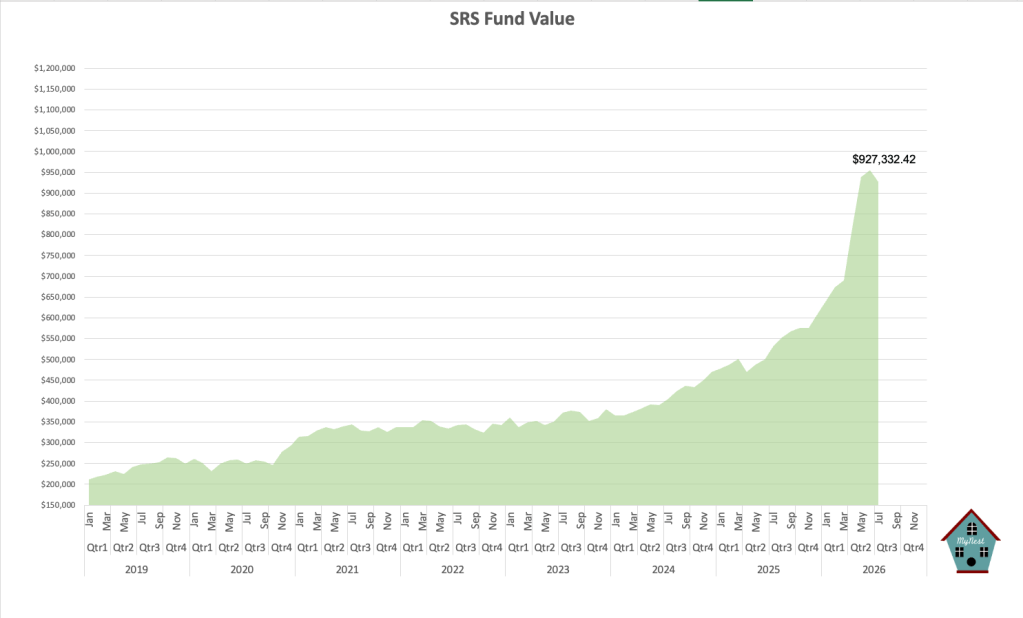
The SRS Fund ended July at $927,332.42 as volatility in semiconductor and AI related holdings offset strength in the banks. Despite the pullback, the portfolio remains firmly above the $900k mark and the longer term upward trend remains intact.
With 5 months left in the year, the $1m year end target remains within reach, although July is a timely reminder that the final stretch is unlikely to be a straight line.
Cash Levels
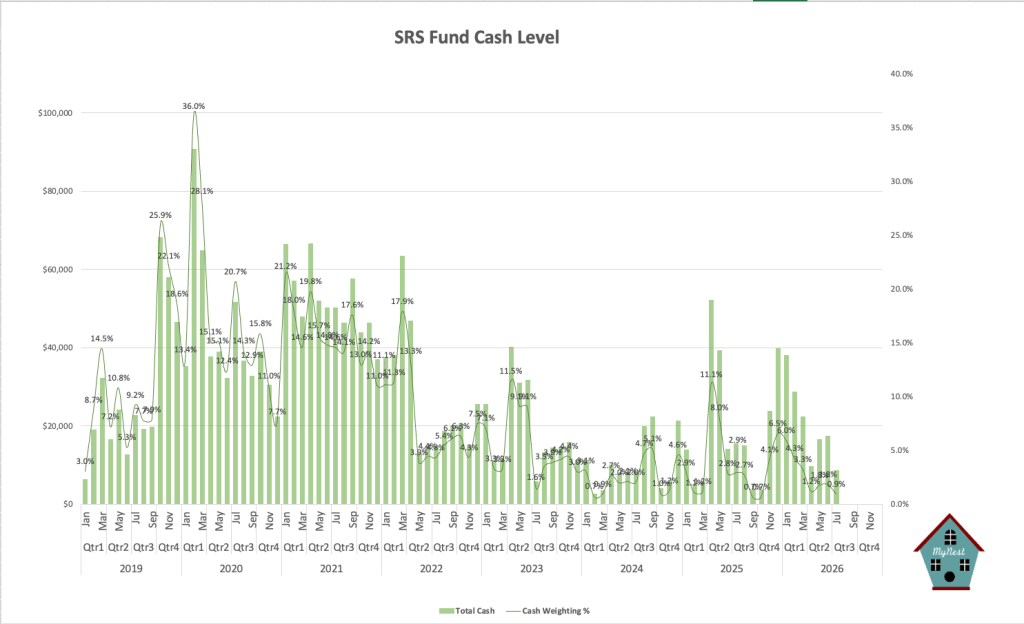
Cash declined further to just 0.9% at the end of July.
This means the SRS Fund remains almost completely invested. Normally, such a low cash position might make me slightly uncomfortable during periods of rising volatility.
However, I also do not believe in selling good businesses simply to manufacture a larger cash position. If opportunities emerge, capital can still be recycled from positions where the risk reward become less attractive.
For now, the preference remains to allow the existing portfolio to compound.
Closing Thoughts
July was a useful reminder that markets do not move in a straight line. The strength in banks helped cushion the volatility in our semiconductor and AI related holdings and the portfolio remains well positioned across two very different long term themes: Singapore’s growing financial and wealth management ecosystem and the continued build out of AI and semiconductor infrastructure.
The SRS Fund stays above the $900k mark within striking distance of the $1m target. Whether I get there this year is less important than continuing to own businesses whose earnings and intrinsic value can compound over time. The destination remains the same; July was simply a bump along the way.
-

The SRS Fund Aug 2026
Aug’s economic update provided another reminder of how closely Singapore has become connected to the global investment in AI and semiconductors.
-
MyNest US Fund Aug 26
The idea behind the “SaaSpocalypse” was simple: if artificial intelligence could write software, generate content and complete business tasks, what would happen to the software companies charging customers to do those things?
-
The SRS Fund Jul 2026
For much of 2026, the market’s attention has been firmly fixed on AI, semiconductors and anything connected to the massive build-out in computing infrastructure.
-
MyNest US Fund Jul 26
After spending a long period watching the artificial intelligence infrastructure build-out from the sidelines, we finally decided to join the party—albeit cautiously.
-
The SRS Fund Jun 2026
The month of Jun provided an important milestone in the Iran conflict. The agreement between the United States and Iran marked a significant step towards reducing geopolitical tension and reopening a clearer path for global energy flows
-
MyNest US Fund Jun 26
June was another remarkable month in the evolution of the global capitalism and the artificial intelligence investment cycle.

