
Dear Investors,
The idea behind the “SaaSpocalypse” was simple: if artificial intelligence could write software, generate content and complete business tasks, what would happen to the software companies charging customers to do those things?
It was a question worth taking seriously. For investors in establised software businesses, AI introduced uncertainty about future growth, pricing power and the durability of their competitive advantages.
Yet the results avaliable by the end of Aug suggest that the predicted collapse has not materialised across several important software businesses. Companies within our own portfolio are showing that they can incorporate AI into their products, attract paying customers and continue to grow.
My interpretation is that AI can strengthen an establised software platform when it makes the platform more useful to its customers. The latest results provide encouraging evidence of that opportunity, even as the competitive landscape continue to evolve.
The SassSpocalypse That Hasn’t Arrived
A software business is worth more than the code used to build its products.
Customers also rely on the information stored within the platform, its connnections to other systems, the reliability of its processes and the familiarity of their employees with its tools. In accounting, customer management and creative production, these relationships can take years to develop.
Making software easier to build does not automatically make an established business easy to replace.
Consider a finance team using software to manage its accounts. An AI tool might generate a report quickly, but the team still needs accurate records, appropriate permissions and a clear explanation of where the numbers came from. An incumbent that can deliver AI capabilities with those existing processes has an opportunity to deepen its customer relationship.
Hence we should assess company by company: whether AI increases the usefulness and earning power of the business we already own.
Evidence From Our Software Holdings
Adobe
Adobe’s Jun results offered an early counterpoint to the pessimistic view. Q2 revenue reach $6.62b, up 13% year on year, while the company’s reported annualised recurring revenue from AI-first products more than tripled to exceed $500m.
Adobe also reported that paid monthly active users of Acrobat AI Assistant increased by more than 150% year on year. This is evidence that customers are paying for AI functionality within Adobe’s ecosystem.
These figures suggest a path for Adobe to commercialise AI alongside its established products. Whether that growth ultimately outweighs competitive pressure across business remains something we must monitor.
Salesforce
Salesforce’s Aug results also showed continued demand. Q2 subscription and support revenue increased 12% to $10.8b, although that figure included a $440m revenue from just merged Informatica.
The company reported Agentforce annual recurring revenue above $1.5b. Its reporting definition expanded this quarter to include additional AI offerings, Slackbot and Headless 360, so comparisons require care. Nevertheless, bookings for its premium Agentforce One Edition and Agentforec for Apps offerings more than doubled from the preceding quarter.
For me, the encouraging signal is that customers are purchasing AI capabilities through an established software provider. Salesforce has an opportunity to turn its existing customer relationships and business processes into a distribution advantage for those capabilities.
Intuit
Intuit reported 14% revenue growth to $21.4b for its financial year. QuickBooks Online Accounting revenue grew 23%, while group GAAP operating income increased 20%. These figures demonstrate continued business growth, although they do not isolate AI’s contribution.
During Aug, Intuit also announced expanded AI capabilities across QuickBooks Online Advanced and Intuit Enterprise Suite. These allow customers to use their business data to ask questions, investigate unusual figures and initiate work through conversational tools.
The opportunity is to make the existing financial platform more capable, helping customers accomplish more within a system they already use.
What We Still Need to Watch
These developments strengthen the case for established software businesses that adapt successfully. They do not establish that every software company will benefit.
AI can reduce demand for some paid user accounts, intensify competition or increase cost of serving customers. Product adoption must eventually translate into durable revenue, satisfactory margins and cash flow.
Our task is therefore to keep examining the economics. We want evidence that customers value the new capabilities enough to pay them, and that the company can deliver them profitably.
That discipline matters just as much when the news is encouraging.
Fund Performance
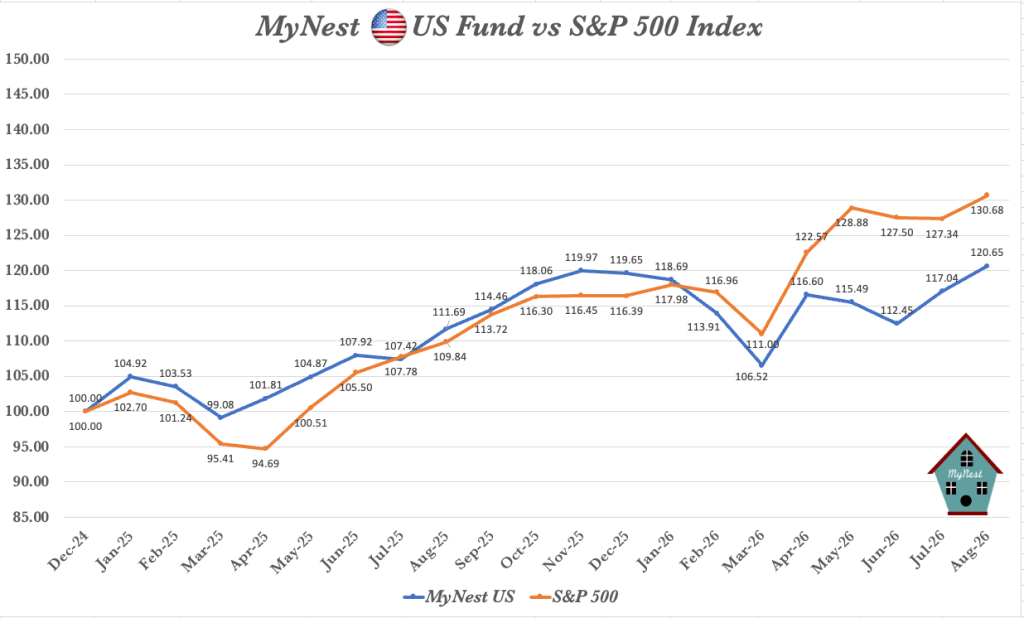
MyNest US Fund closed at a reported price of $1.206 at the end of Aug, recording its second consecutive monthly gain.
| Period | MyNest US Fund | S&P 500 |
|---|---|---|
| August 2026 | +3.08% | +2.62% |
| Year to date | +0.84% | +12.28% |
| Since inception in December 2024 | +20.65% | +30.68% |
The fund outperformed the benchmark by approximately 0.46% during the month and returned to positiive territory for the year.
This was welcome progress, although our cumulative return since inception remains around 10% behind the S&P 500. We remain focused on improving long term results through sound investment decisions.
Portfolio Activity
During Aug, we bought shares in MercadoLibre (2.58%) and S&P Global (1.45%). We have also trim our stake in Paypal at a slight loss as it growth have stagnent since our purchased.
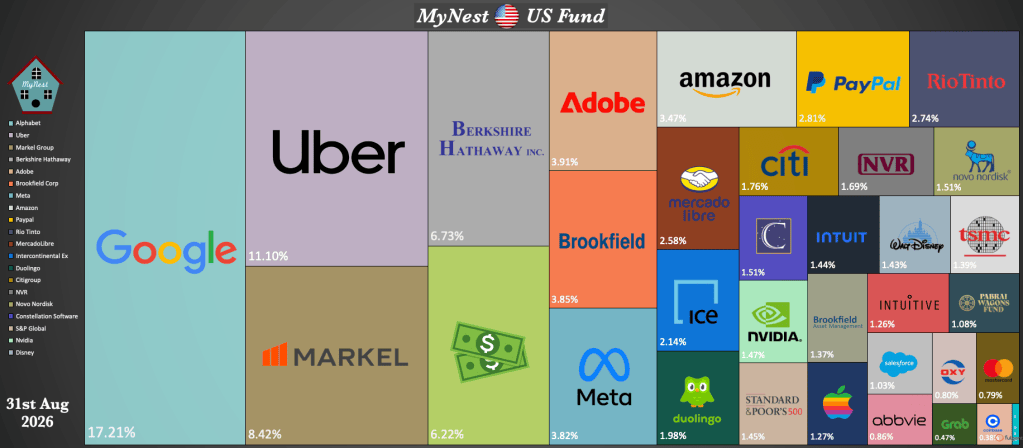
MercadoLibre: We bought shares in MELI to participate in Latin America’s continued growth in online shopping and digital financial services. Its marketplace and Mercado Pago ecosystem offer substantial opportunities to expand customer reach and usage. We consider the purchase price reasonable relative to its long term growth prospects and earning potential.
S&P Global: The starter position in SPGI was taken primarily for its durable credit rating business. Its established reputation and ongoing ratings monitoring relationships provide a recurring revenue base, although earnings remain sensitive to debt issuance activities.
Segment Chart
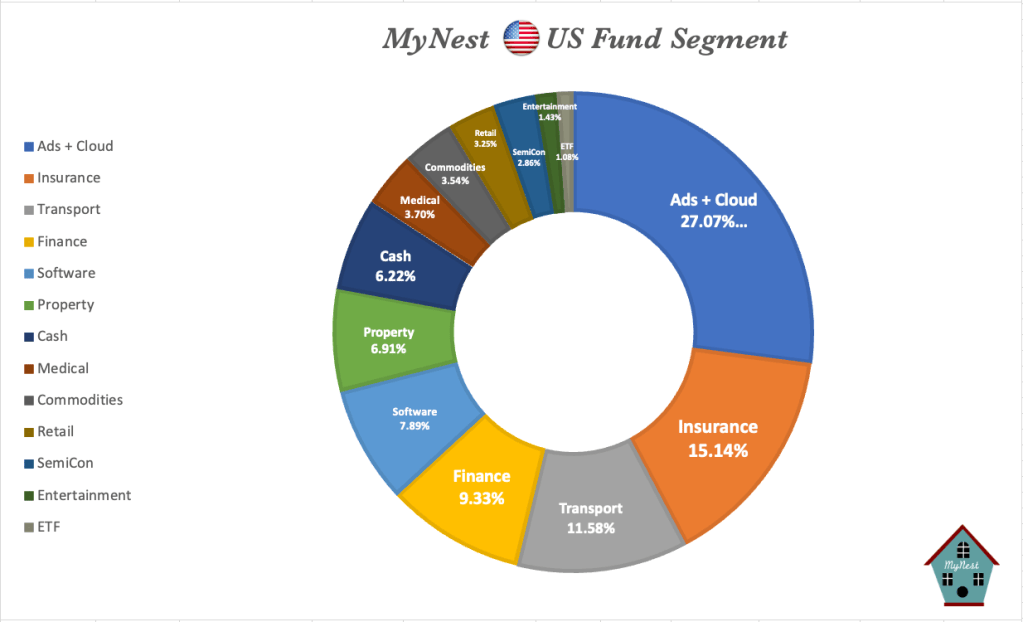
Under our portfolio classification, Ads + Cloud remained the largest segment at 27.07% followed by Insurance at 15.14%, Transport at 11.58% and Finance at 9.33%. Cash stood at 6.22%, providing flexibility for future investment opportunities.
Closing Thoughts
The lesson from this earnings season is that we should examine how individual businesses respond to technological change before accepting a sweeping conclusion about their future.
Several established software companies are demonstrating paid AI adoption alongside continued growth. That gives us reason to look carefully at the advantages they already possess: Customer Relationships, Trusted Data, Specialist knowledge and products embedded in daily work.
Our conviction must continue to earn its place through evidence. We will monitor whether these businesses can convert better products into stronger long term cash generation while remaining disciplined about the prices we pay.
I would lastly like to thank you all for your contnued trust and support.
-
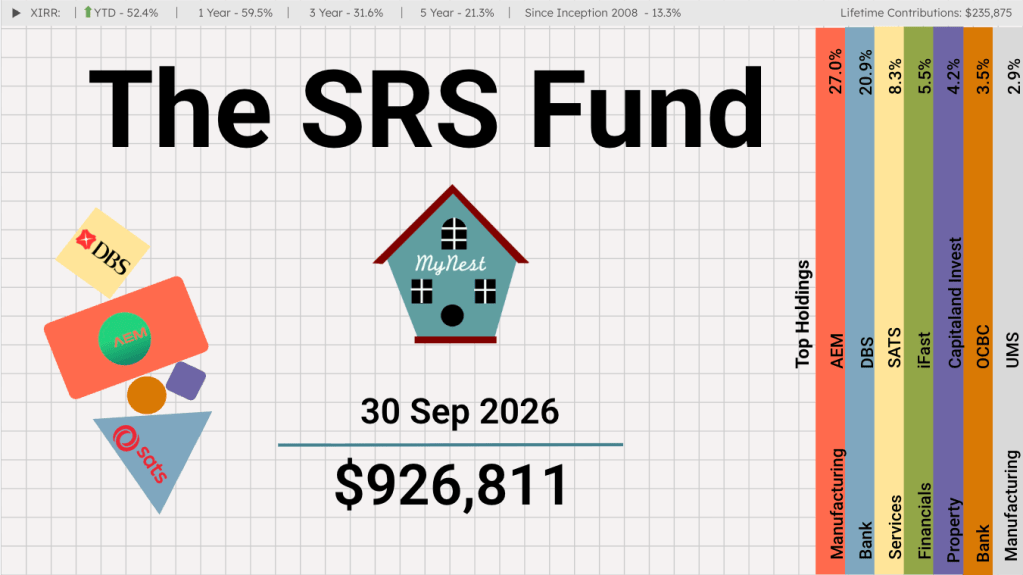
The SRS Fund Sep 2026
Sep brought a modest recovery in the SRS Fund, but it also left me thinking more carefully about how much of Singapore’s current economic and market strength is connected to the AI investment cycle.
-
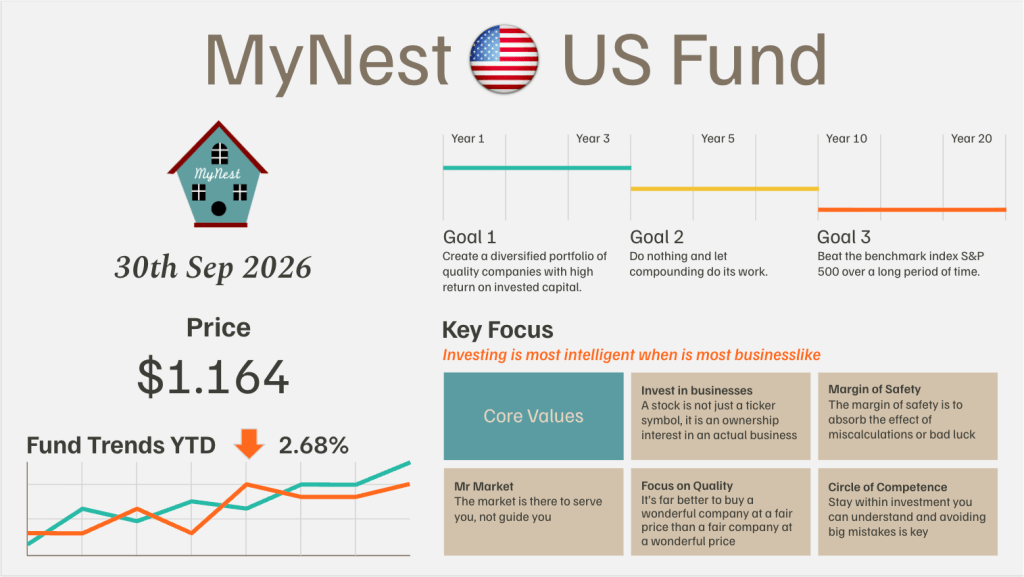
MyNest US Fund Sep 26
The month of Sep brought together two developments that matter to our portfolio: Further progress in the field of AI and a sharp increase in long-term interest rates.
-

The SRS Fund Aug 2026
Aug’s economic update provided another reminder of how closely Singapore has become connected to the global investment in AI and semiconductors.
-
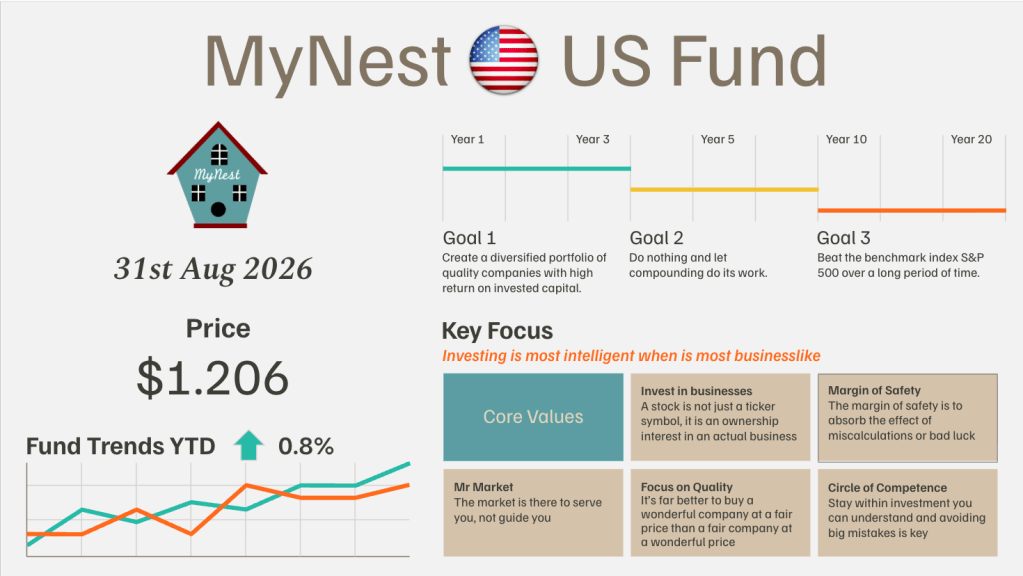
MyNest US Fund Aug 26
The idea behind the “SaaSpocalypse” was simple: if artificial intelligence could write software, generate content and complete business tasks, what would happen to the software companies charging customers to do those things?
-
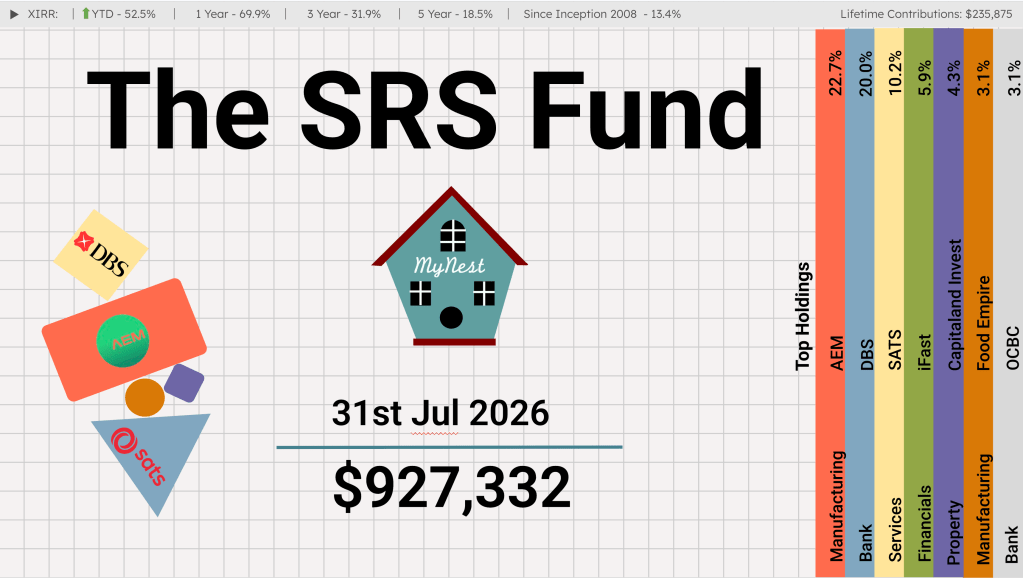
The SRS Fund Jul 2026
For much of 2026, the market’s attention has been firmly fixed on AI, semiconductors and anything connected to the massive build-out in computing infrastructure.
-
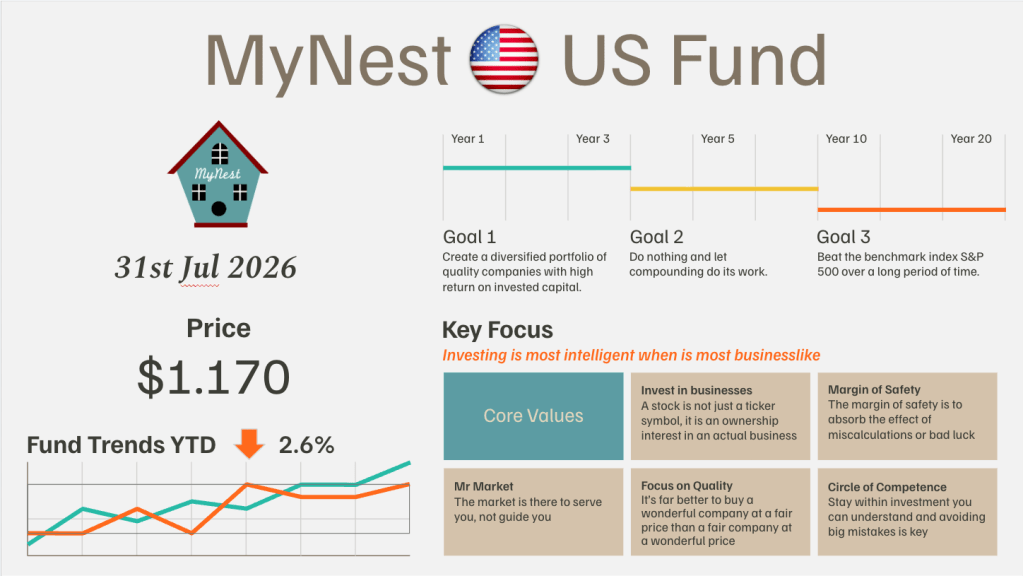
MyNest US Fund Jul 26
After spending a long period watching the artificial intelligence infrastructure build-out from the sidelines, we finally decided to join the party—albeit cautiously.

