
All Roads Leads Back to AI
Sep brought a modest recovery in the SRS Fund, but it also left me thinking more carefully about how much of Singapore’s current economic and market strength is connected to the AI investment cycle.
Last month, I wrote about the benefits flowing from electronics and semiconductor investment into the wider economy. This month, my concern is the growing dependence on that momentum. The connections extend from semiconductor equipment and testing to financial markets, wealth management and investor confidence.
For a portfolio dominated by manufacturing and finance, those connections deserve attention.
Singapore’s participation in the AI expansion is tangible. Applied Materials’ new US$500 million Tampines campus, announced in June, more than doubles its advanced cleanroom capacity here and supports chipmakers expanding production for AI demand. This represents investment in local production capacity, engineering and employment.
The opportunity also extends into semiconductor testing. As chips become more complex, ensuring that they perform reliably becomes increasingly demanding. AEM Holdings‘ exposure to testing AI and high-performance computing devices makes this particularly relevant to the SRS Fund.
However, the spending across this supply chain ultimately needs to be supported by customers finding enough value in AI to keep paying for it.
That is why I am watching OpenAI and Anthropic closely. Their model capabilities matter, but so do customer retention, enterprise adoption, pricing and the cost of delivering their services. Strong revenue growth needs to develop into a credible business model that can support the enormous investment being made around it.
My concern is that expectations across many different companies may be resting on the same assumption: AI demand will continue growing quickly enough to justify today’s spending and valuations.
The IPO process will be an important test of that confidence. Anthropic is still pursuing a public listing. OpenAI, however has ruled out a 2026 IPO.
A well-received listing could strengthen confidence and access to capital. A disappointing reception could cause investors to reassess valuations further along the supply chain. Neither outcome alone would settle the long-term economics of AI, but both could influence the willingness to fund its expansion.
I see these companies as important tests of the commercial case for AI. Their progress could affect businesses much further away than their immediate suppliers, including some of the Singapore companies in this portfolio.
The connection to banking is less direct, but still relevant.
Strong financial markets can increase the value of assets under management and encourage investment activity. Singapore’s banks can benefit through wealth management, investment products and related fees. To the extent that AI has supported market gains and investor confidence, part of that benefit may also reach the banks.
DBS’ second-quarter results showed wealth management assets exceeding S$500 billion, with wealth fees reaching a new high. Those results demonstrate the strength of the franchise, although they do not tell us how much of that growth was attributable to AI-related wealth or investment activity.
This leaves me considering whether manufacturing and finance offer as much diversification as their different sector labels suggest. A reversal in AI enthusiasm could affect semiconductor spending and wealth-management activity through different channels.
There is, nevertheless, a potential additional tailwind for the banks from interest rates.
On 16 Sep, the Federal Reserve raised its target range by 0.25 percentage points to 3.75%–4.00%. Locally, Phillip Securities reported that three-month SORA had risen for four consecutive months through Aug, although it remained below its level a year earlier.
If the recovery in Singapore interest rates continues, it should gradually help banks earn more on loans and other interest-bearing assets. The benefit will depend on how quickly those assets reprice relative to deposits, as well as borrowing demand and credit quality.
For DBS, OCBC and UOB, improving interest income alongside healthy wealth-management activity would be a favourable combination. Higher financing costs would also create pressure elsewhere, including parts of the property sector held by the fund.
SRS Fund Performance vs. Benchmark
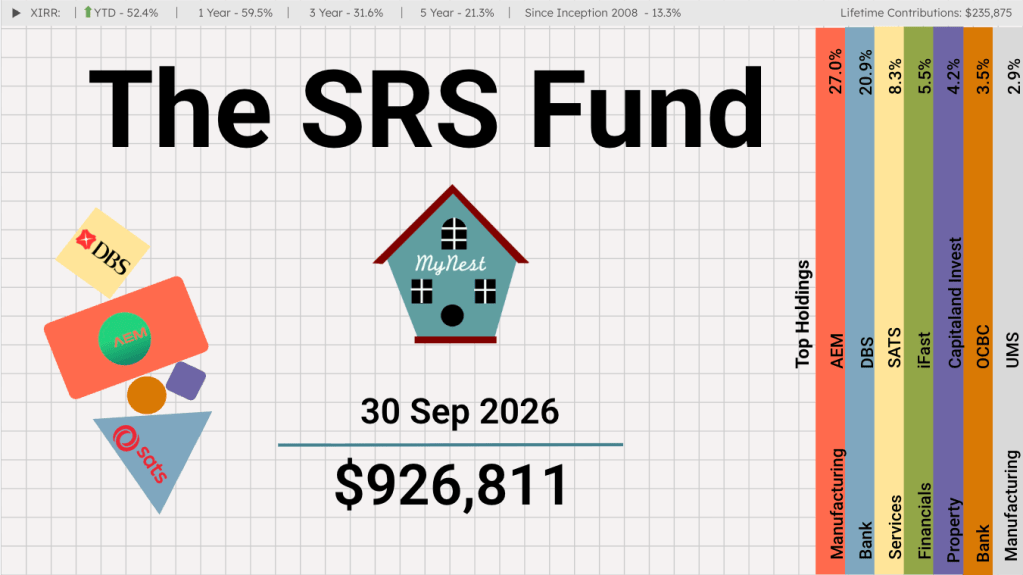
Against this backdrop, the SRS Fund ended 30 Sep 2026 at $926,811.75, compared with $921,839.35 at the end of Aug. This was an increase of $4,972.40, or approximately 0.54%
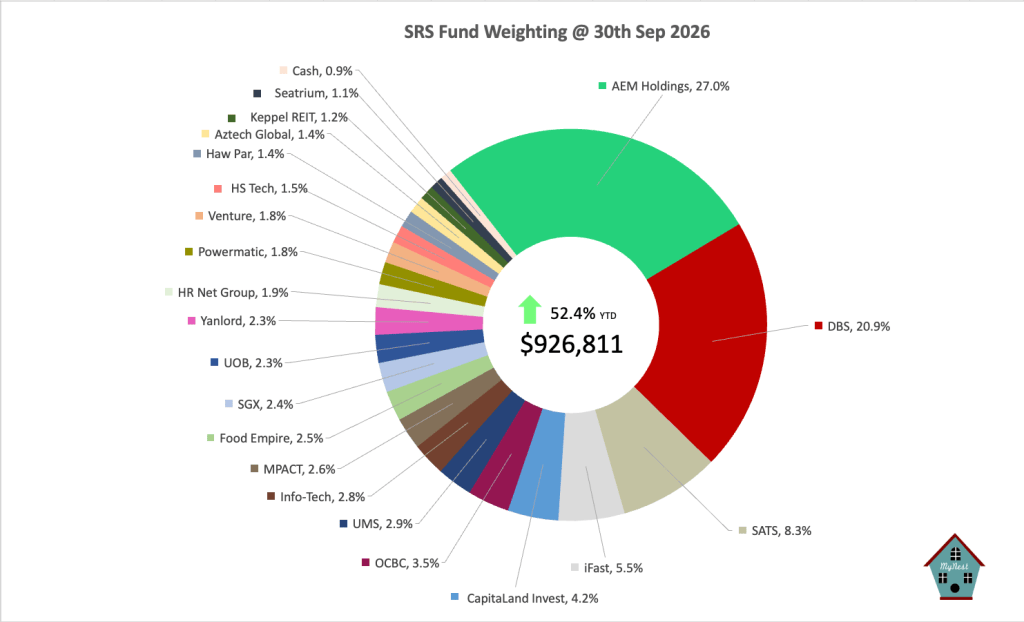
Performance Comparison
| Metric | The SRS Fund | STI Index (Benchmark) |
| YTD Return (Apr 2026) | +52.4% | ~+26.4% |
| Cash Weighting | 0.9% | N/A |
| Top Holding | AEM Holdings (27.0%) | DBS (~29.8%) |
Portfolio Segments
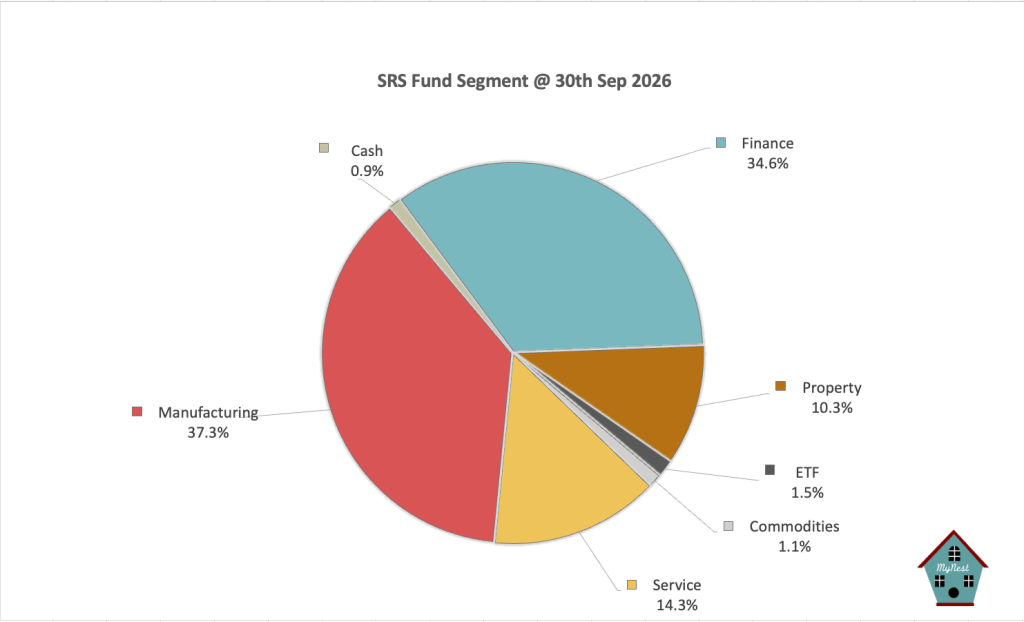
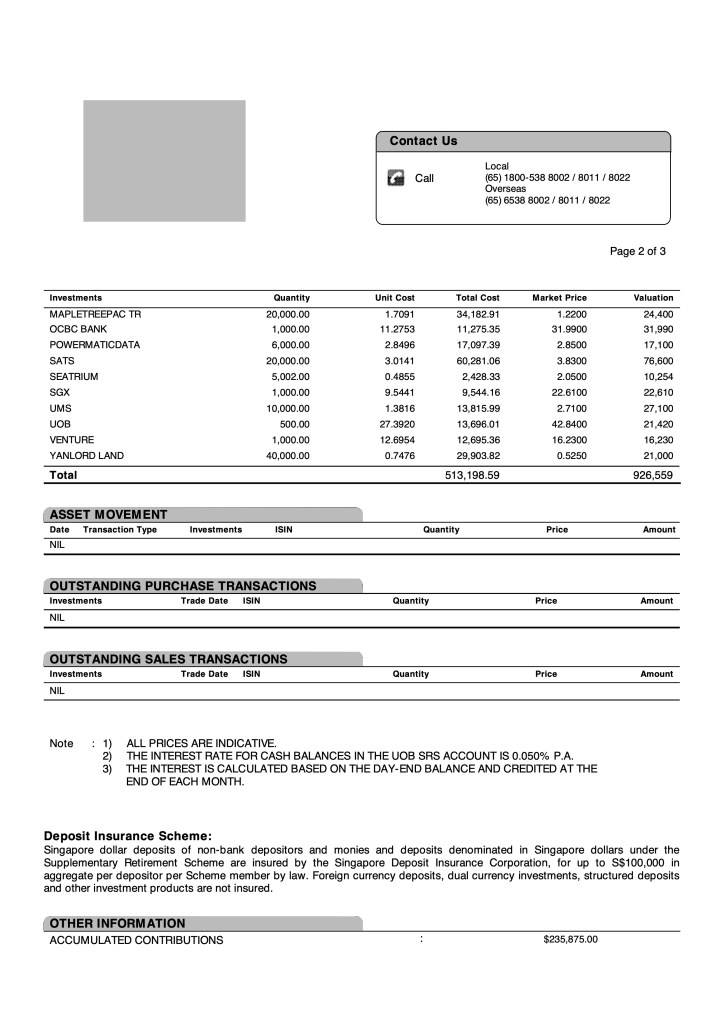
Manufacturing accounted for 37.3% of the portfolio and finance for 34.6%. Combined, these two segments represented approximately 71.9%.
That concentration makes the concerns discussed above relevant to my own portfolio. I need to assess each company’s earnings, cash generation and valuation while also considering the economic assumptions shared across the holdings.
Dividends
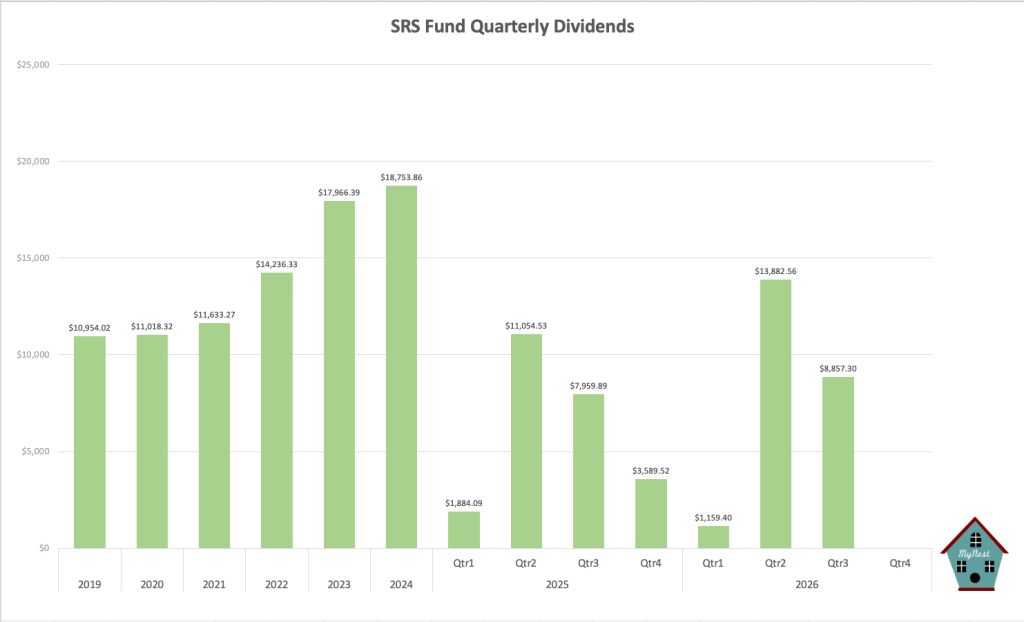
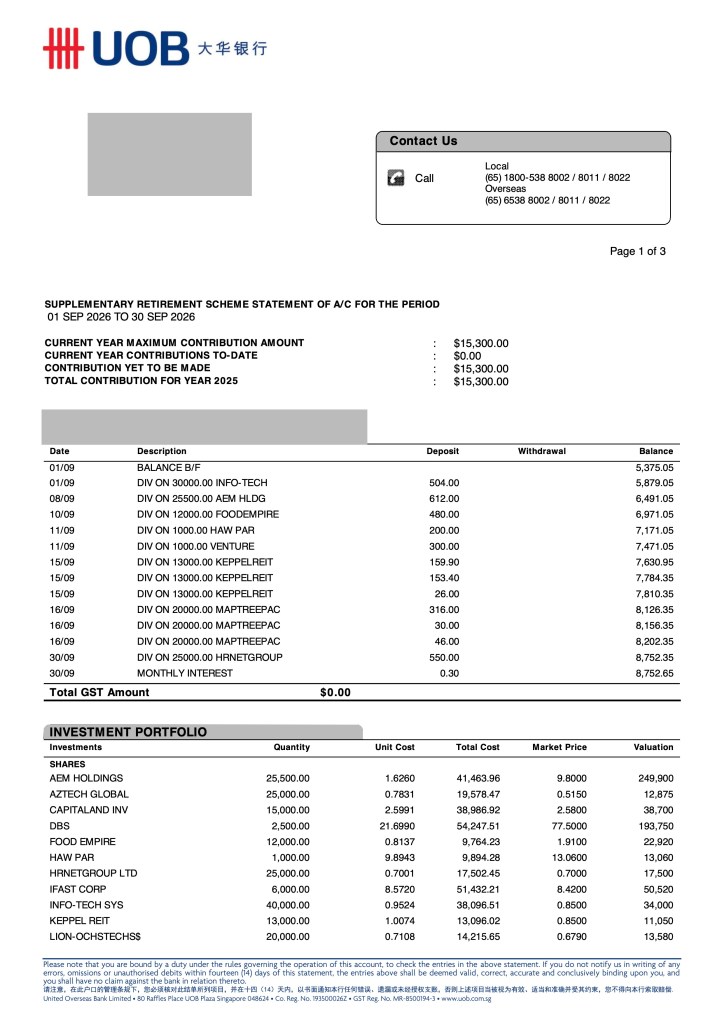
Dividend income continued to accumulate during Sep. The SRS Fund received $3,377.30 for the month, bringing third-quarter dividends to $8,857.30 and total dividends for the first nine months of 2026 to $23,899.26.
That was approximately 14.4% higher than the same period in 2025 and already close to the $24,488.03 received during the whole of last year.
These receipts provide a continuing source of cash for reinvestment. They are already reflected in the portfolio’s cash and valuation figures, so they should not be added again to the reported return.
SRS Fund Value
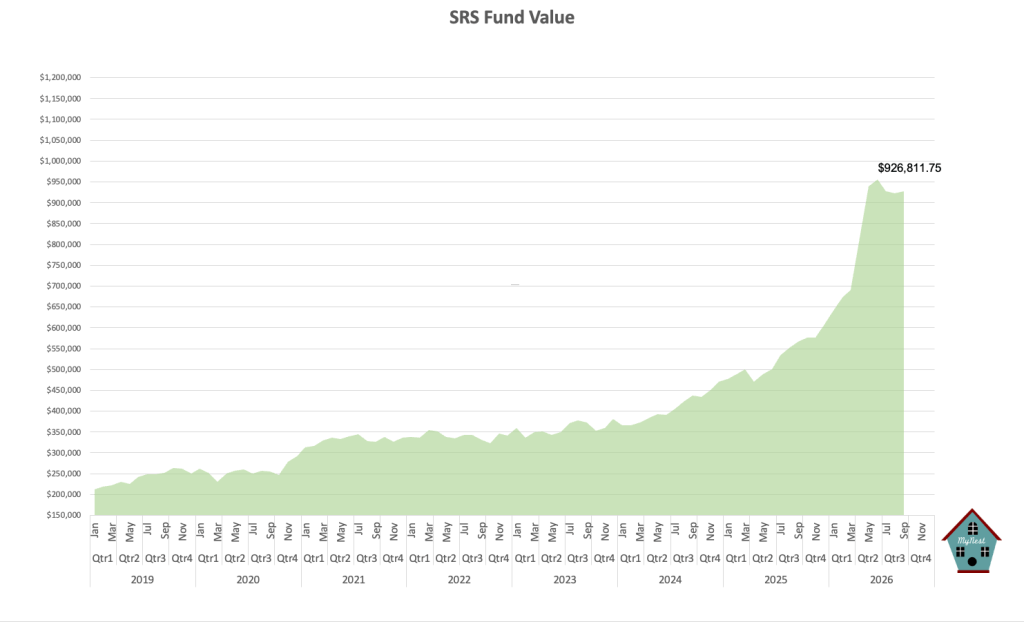
The SRS Fund ended Sep at $926,811.75, an increase of $4,972.40, or approximately 0.54%, from Aug.
The fund value chart shows a period of consolidation following the sharp rise earlier in the year. September’s closing value remained approximately 3.0% below the June close, while the year-to-date return stood at 52.4%. The recent fluctuations are a useful reminder of how quickly portfolio valuations can change, even during a strong year.
With AEM and DBS together accounting for nearly 48% of the fund, movements in these two holdings continue to have a substantial influence on its value. Their exposure to semiconductor demand, financial markets and the broader investment cycle also reinforces my concern about concentration.
Cash Levels
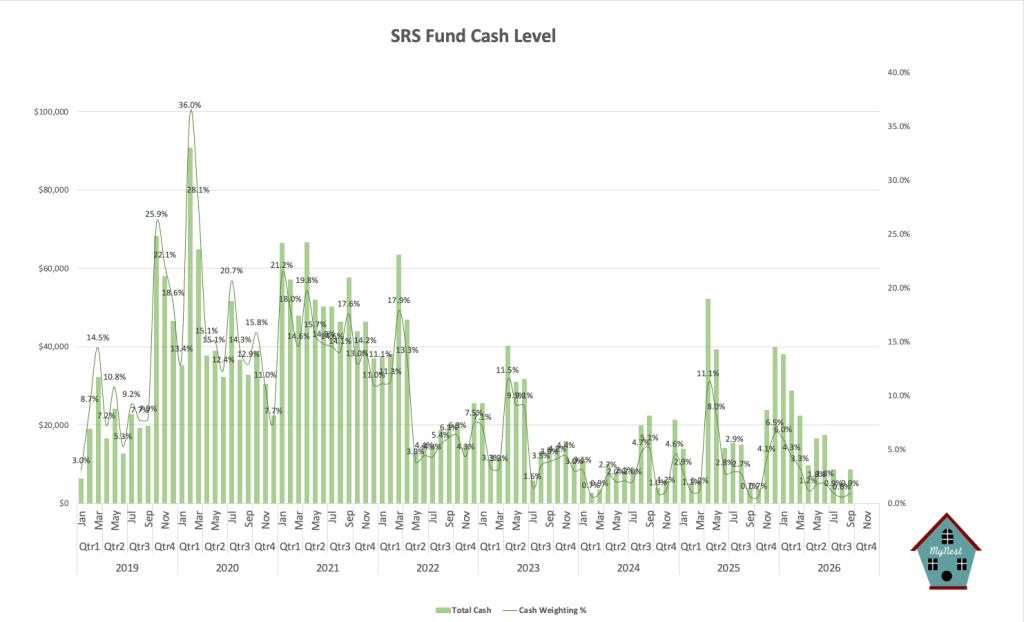
Cash ended Sep a $8,752.65, or approximately 0.9% of the portfolio. The fund therefore remained almost fully invested, with limited immediate capacity to make substantial new purchases.
Closing Thoughts
I remain interested in the opportunities AI is creating for Singapore. My attention is increasingly on whether the businesses at the centre of that expansion can generate the returns needed to sustain it, and whether the companies I own can convert the opportunity into durable earnings and cash flow
With manufacturing and finance making up most of the SRS Fund, that will remain an important part of how I assess the portfolio in the months ahead.
-
The SRS Fund Sep 2026
Sep brought a modest recovery in the SRS Fund, but it also left me thinking more carefully about how much of Singapore’s current economic and market strength is connected to the AI investment cycle.
-
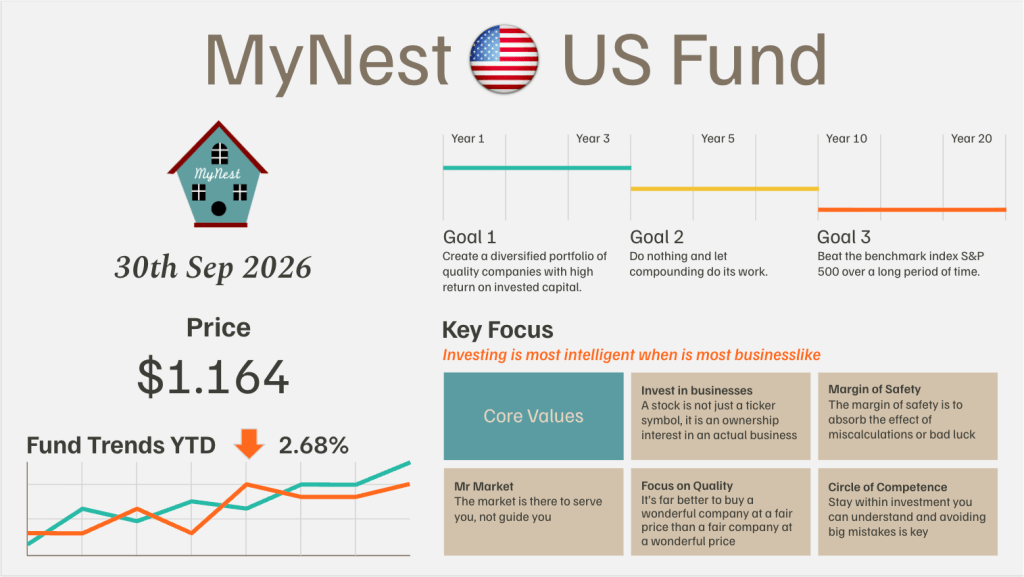
MyNest US Fund Sep 26
The month of Sep brought together two developments that matter to our portfolio: Further progress in the field of AI and a sharp increase in long-term interest rates.
-

The SRS Fund Aug 2026
Aug’s economic update provided another reminder of how closely Singapore has become connected to the global investment in AI and semiconductors.
-
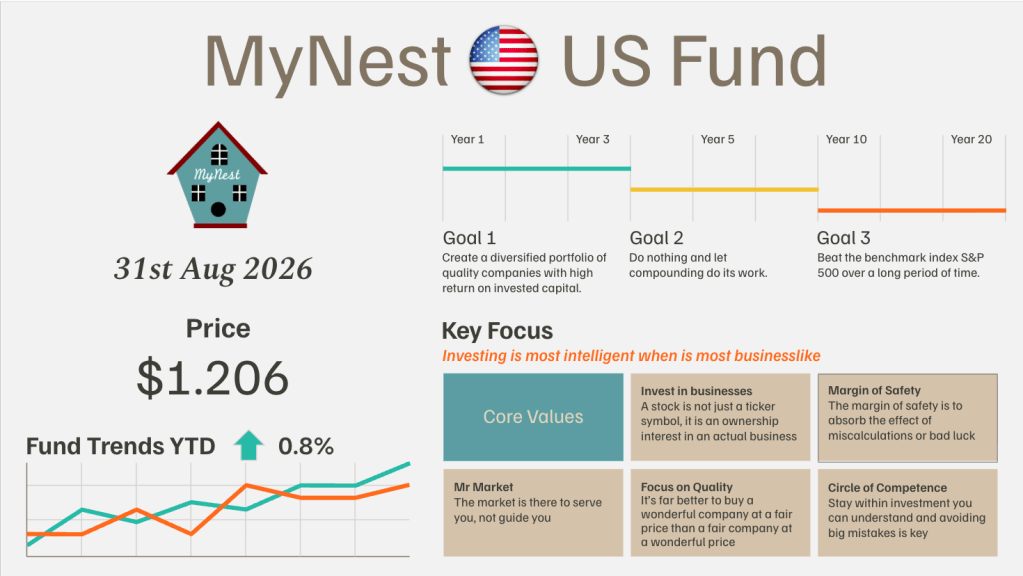
MyNest US Fund Aug 26
The idea behind the “SaaSpocalypse” was simple: if artificial intelligence could write software, generate content and complete business tasks, what would happen to the software companies charging customers to do those things?
-
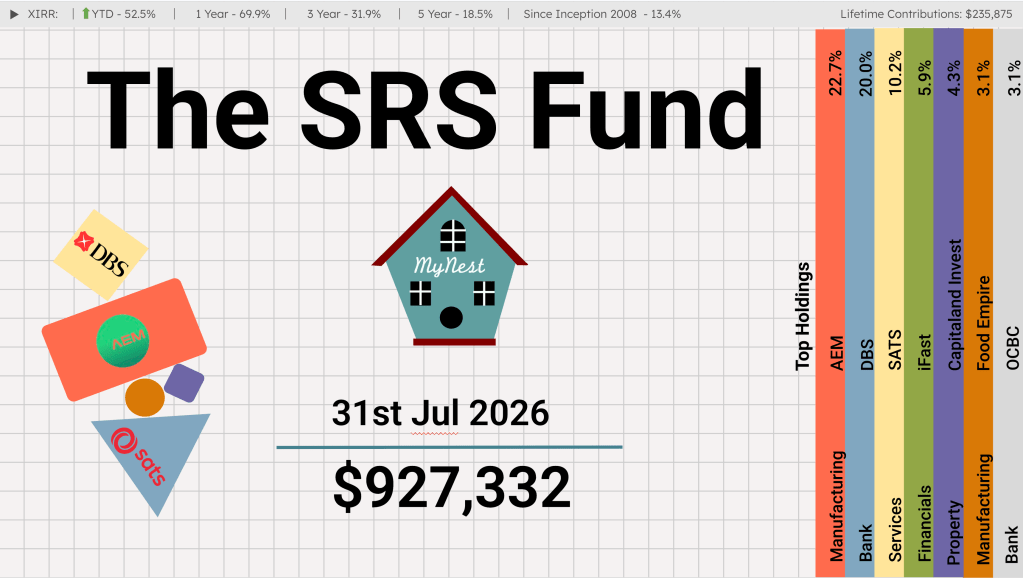
The SRS Fund Jul 2026
For much of 2026, the market’s attention has been firmly fixed on AI, semiconductors and anything connected to the massive build-out in computing infrastructure.
-
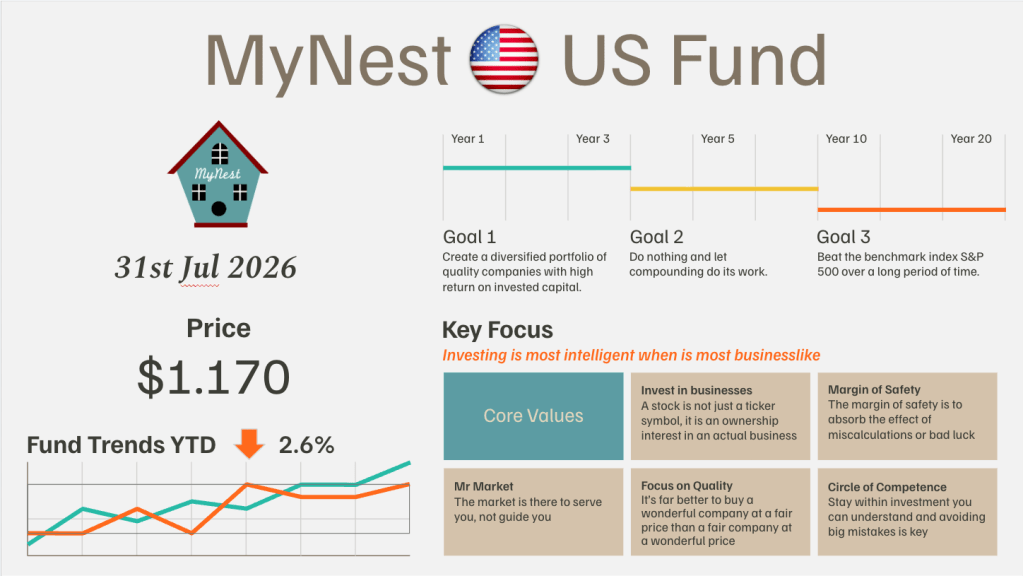
MyNest US Fund Jul 26
After spending a long period watching the artificial intelligence infrastructure build-out from the sidelines, we finally decided to join the party—albeit cautiously.

