

Historically inversion of the yield curve had forewarned a recession in the making. After 2 decades of low-interest rates, runaway inflation post-Covid had finally pushed the federal reserves to increase the short-term rates at an unprecedented pace, now at over 5.5%.
However long-dated bonds had risen much slower, creating the inverted yield curve as we have known. Since the start of a rate rise in mid-2022 investors have been clamoring that the rising short end of the curve is a temporary measure to curb high inflation. The narrative is always that short-term interest rates will have to come down when inflation becomes subdued or faced with a severe recession.
Historical low-interest rates should not be taken for granted mainly because one cannot simply assume inflation will return to low levels. In fact, trends have been pointing to higher inflation including, deglobalisation, higher sovereign debt levels, and geopolitical instability.
With all the reasons above I would argue that the Normalisation of the Yield Curve would adjust on the long end of the curve rising beyond the short-term interest rates. The normalization process will be painful for financial markets as asset prices readjust and investors come to terms with the “Normalized” level of interest rates.
Howard Marks recently argued for the case of high-yield bond investment over equity upon further thoughts of his “Sea Change” article. While I fully embrace the “Sea Change” article, I beg to differ on his recent conclusion. As we see higher inflation, only quality businesses that are able to pass on the higher costs to end customers will endure and thrive in the new environment.
Bonds regardless of whether high yield or not do not have such defensive characteristics. However, I agree that such high-yield strategies may still outperform many individual stocks that will likely be swept away by this inflationary tsunami.
-
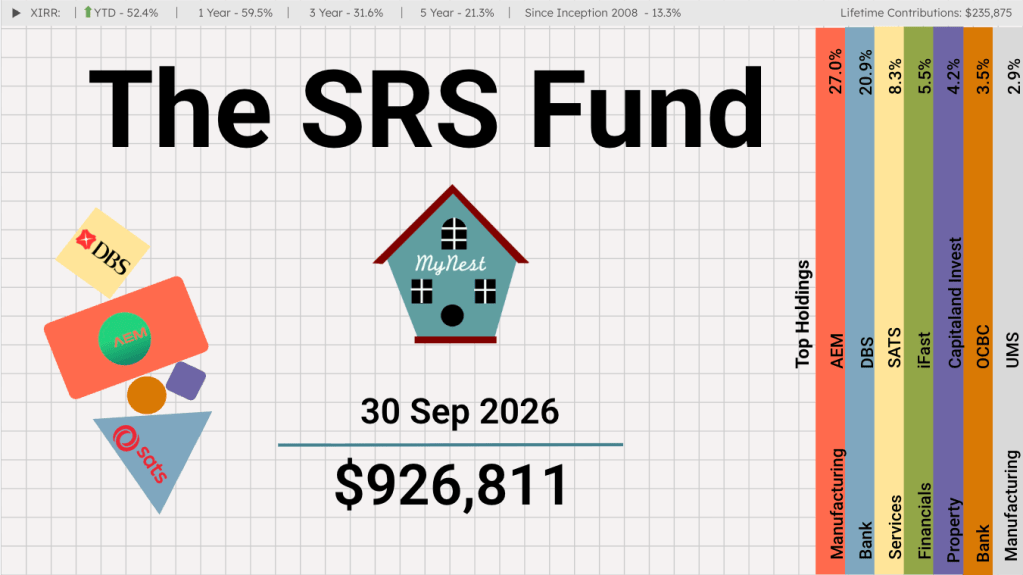
The SRS Fund Sep 2026
Sep brought a modest recovery in the SRS Fund, but it also left me thinking more carefully about how much of Singapore’s current economic and market strength is connected to the AI investment cycle.
-
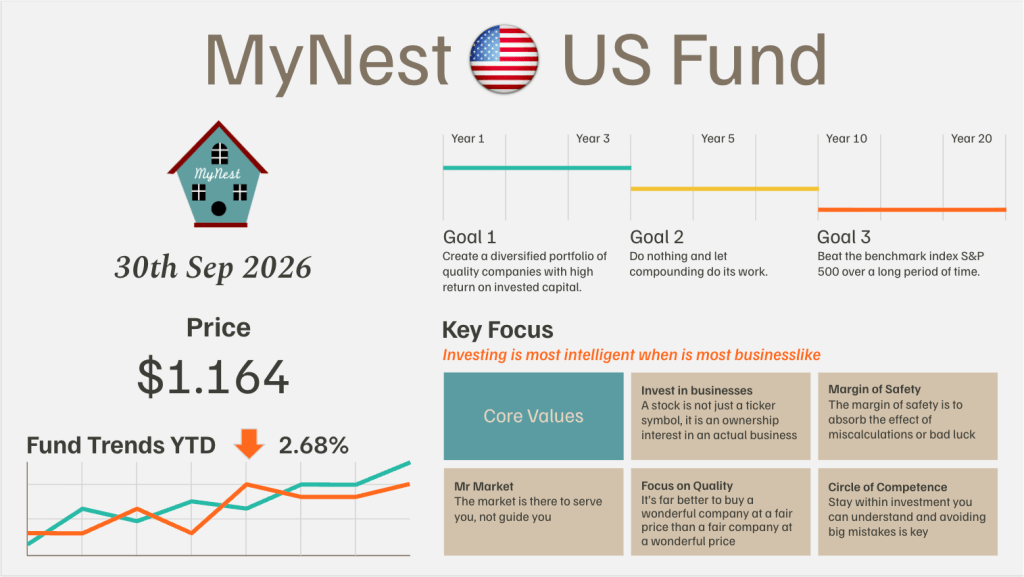
MyNest US Fund Sep 26
The month of Sep brought together two developments that matter to our portfolio: Further progress in the field of AI and a sharp increase in long-term interest rates.
-

The SRS Fund Aug 2026
Aug’s economic update provided another reminder of how closely Singapore has become connected to the global investment in AI and semiconductors.
-
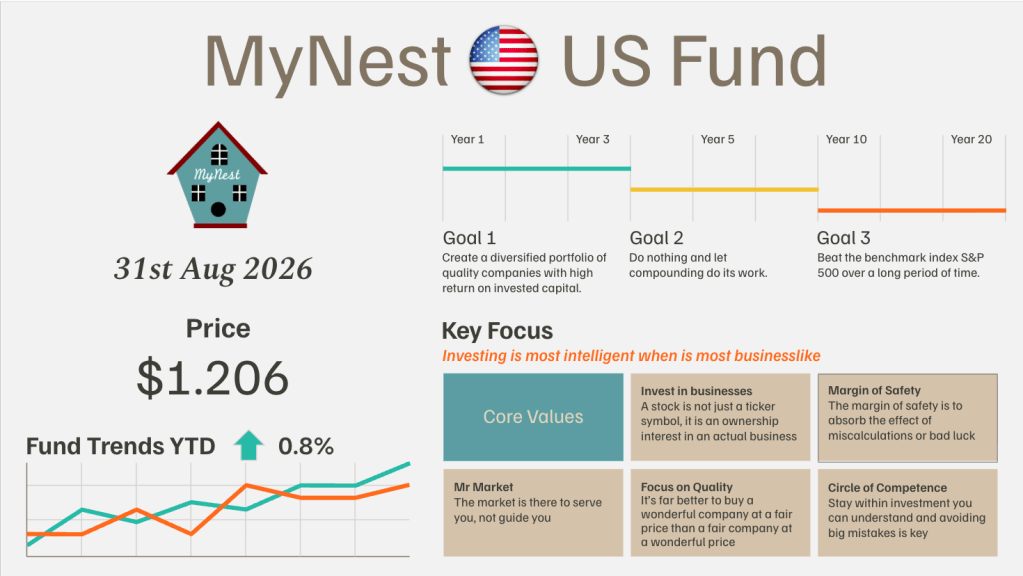
MyNest US Fund Aug 26
The idea behind the “SaaSpocalypse” was simple: if artificial intelligence could write software, generate content and complete business tasks, what would happen to the software companies charging customers to do those things?
-
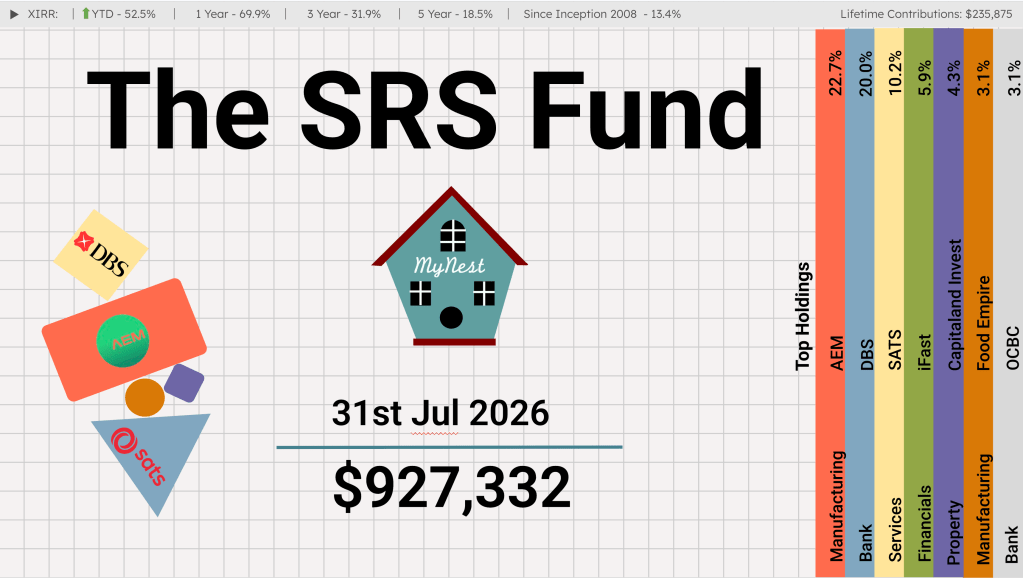
The SRS Fund Jul 2026
For much of 2026, the market’s attention has been firmly fixed on AI, semiconductors and anything connected to the massive build-out in computing infrastructure.
-
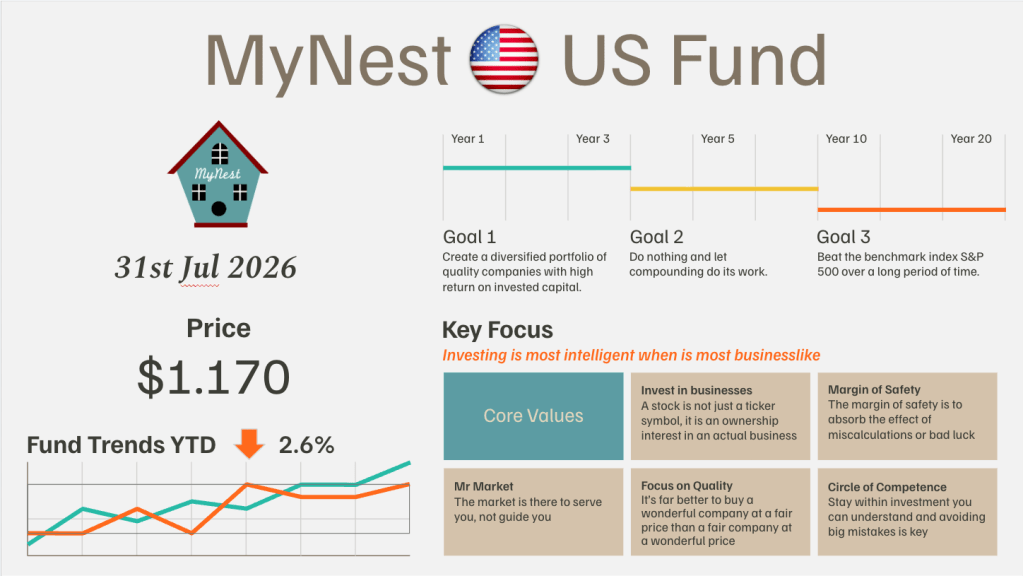
MyNest US Fund Jul 26
After spending a long period watching the artificial intelligence infrastructure build-out from the sidelines, we finally decided to join the party—albeit cautiously.

