

Long-time investors who are familiar with this company that produces our beloved Tiger Balm oil. As the world freed itself from Covid 19, the company made a stellar recovery in sales increasing revenue by 39.7% in the 2H of 2023.

Experienced investors would have also known Haw Par has an investment portfolio consisting of shares in UOB and UOL forming an intricate web of holdings by the Wee family in one of Singapore’s largest banks. As of the latest results, UOB shares in Haw Par book are worth $2.13b and its investment portfolio itself adds up to $2.6b exceeding its current market cap of $2.18b.
While one can interpret that buying this debt-free business at the current price is equivalent to buying the investment portfolio and getting the healthcare business for free, there must be a good reason for its undervaluation to exist in the first place.
It turns out that the company’s revenue consists of 3 major components comprising of the Tiger Balm business, Property Rental income as well as dividend income from the investment portfolio. However, dividends paid to shareholders over the years have been much less than the dividend income it has received.
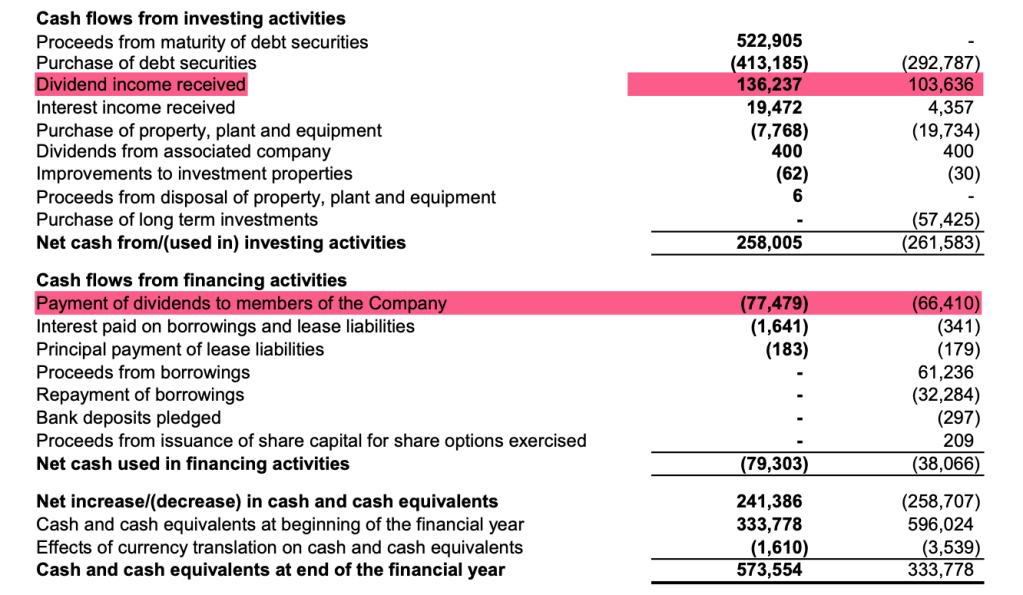
So why does a debt-free company with more than $700m in cash need to retain so much of its profits when its return on equity is merely 6.3%? I think the market is confused too thus pricing it as such.

While I may have no idea why management would like to keep such a big war chest, I do know that this big amount getting more interest than ever before. Further, the headline figure of 6.3% actually musks the true earning power of the gem in the investment portfolio.
UOB return on equity is likely to exceed 10% on average and much of this is not captured in the financial statements. It would mean the dividend will continue to grow at a 10% rate and its true earnings are actually closer to $350m than the reported figure.
As such investors will be buying the company at a PE ratio of 6.2 times true earnings with a tailwind of the healthcare business picking up further steam. As such I have made an initial investment into the company with the SRS Fund which will be reflected in its latest upcoming Feb Statement.
-
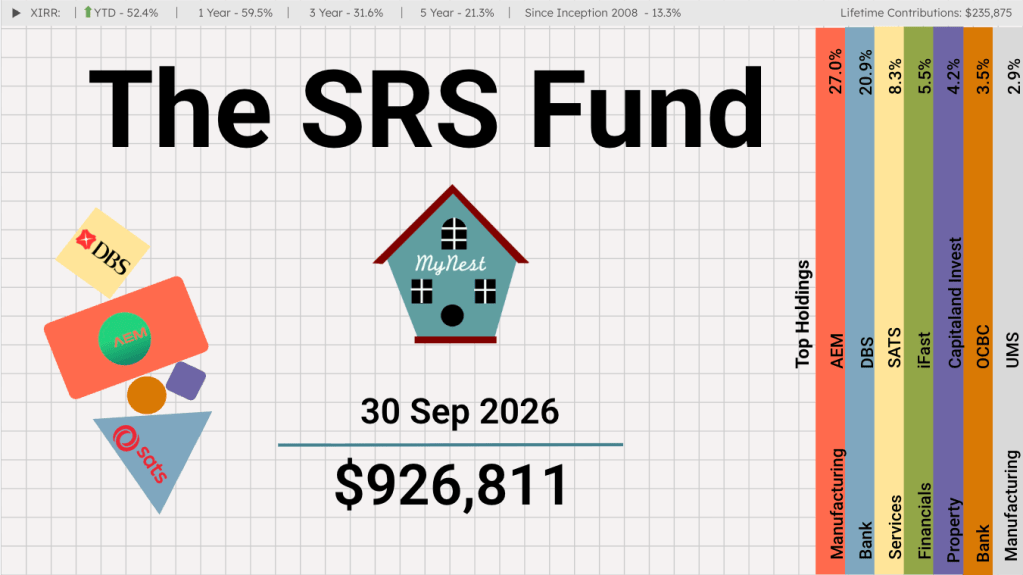
The SRS Fund Sep 2026
Sep brought a modest recovery in the SRS Fund, but it also left me thinking more carefully about how much of Singapore’s current economic and market strength is connected to the AI investment cycle.
-
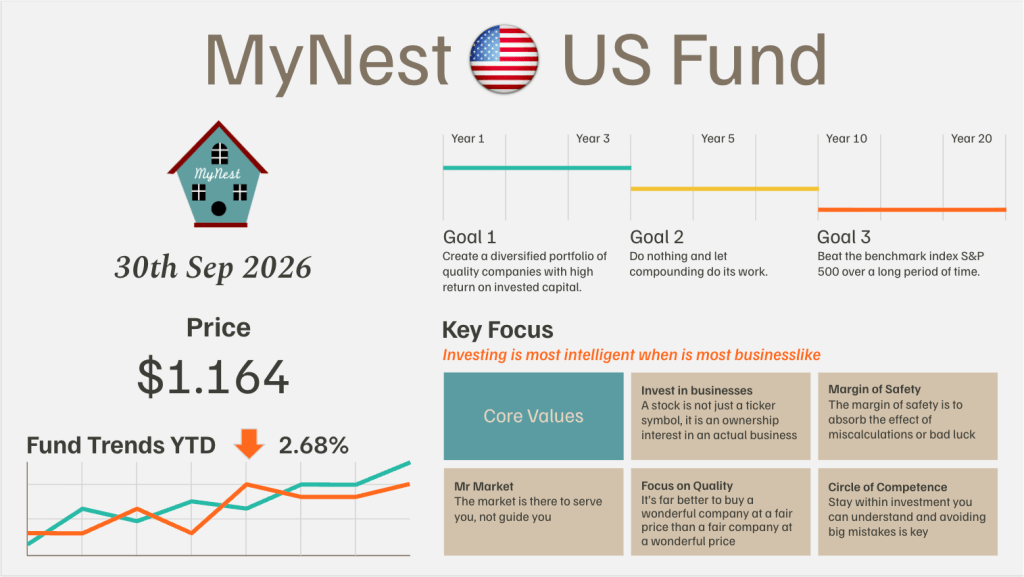
MyNest US Fund Sep 26
The month of Sep brought together two developments that matter to our portfolio: Further progress in the field of AI and a sharp increase in long-term interest rates.
-

The SRS Fund Aug 2026
Aug’s economic update provided another reminder of how closely Singapore has become connected to the global investment in AI and semiconductors.
-
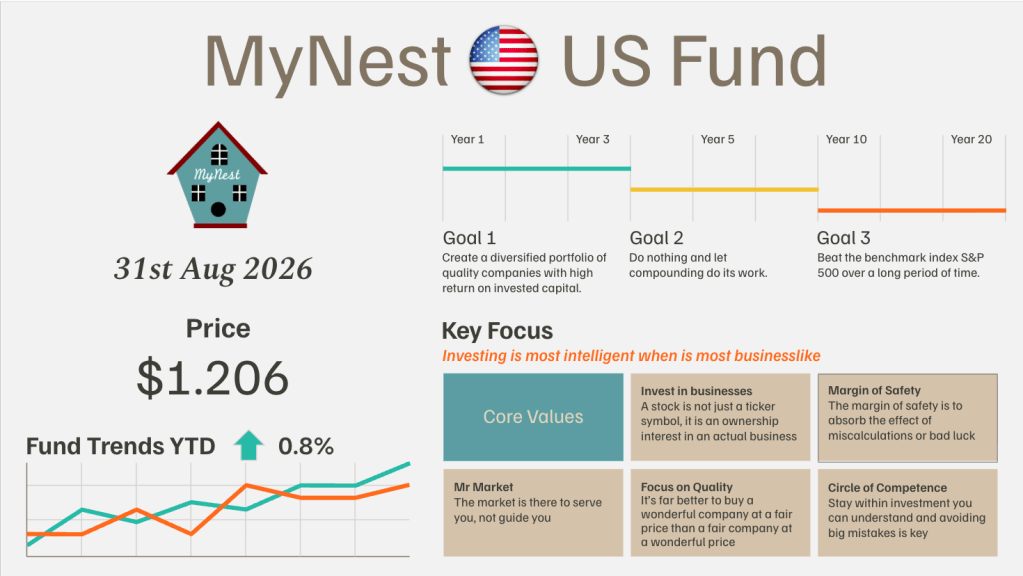
MyNest US Fund Aug 26
The idea behind the “SaaSpocalypse” was simple: if artificial intelligence could write software, generate content and complete business tasks, what would happen to the software companies charging customers to do those things?
-
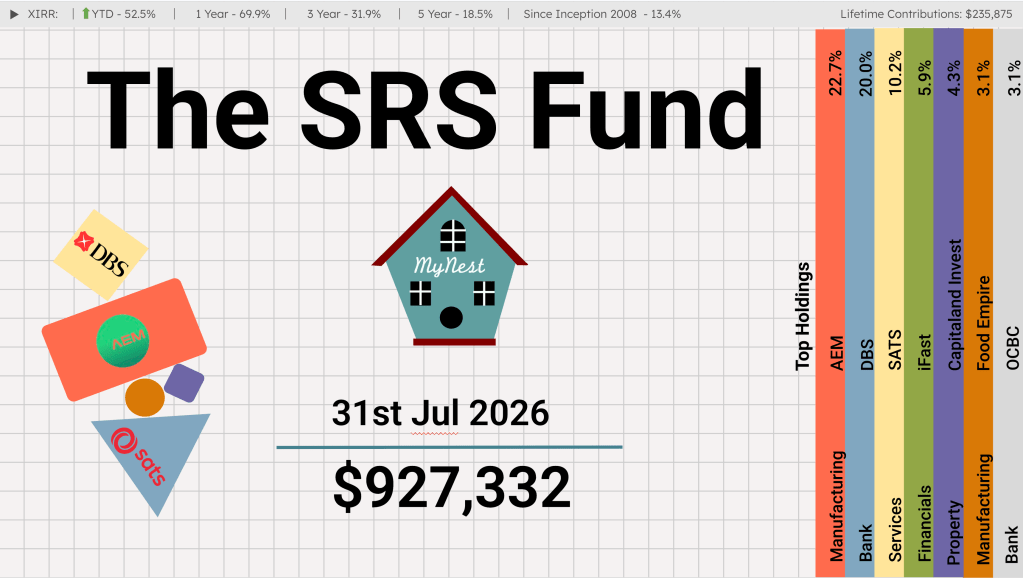
The SRS Fund Jul 2026
For much of 2026, the market’s attention has been firmly fixed on AI, semiconductors and anything connected to the massive build-out in computing infrastructure.
-
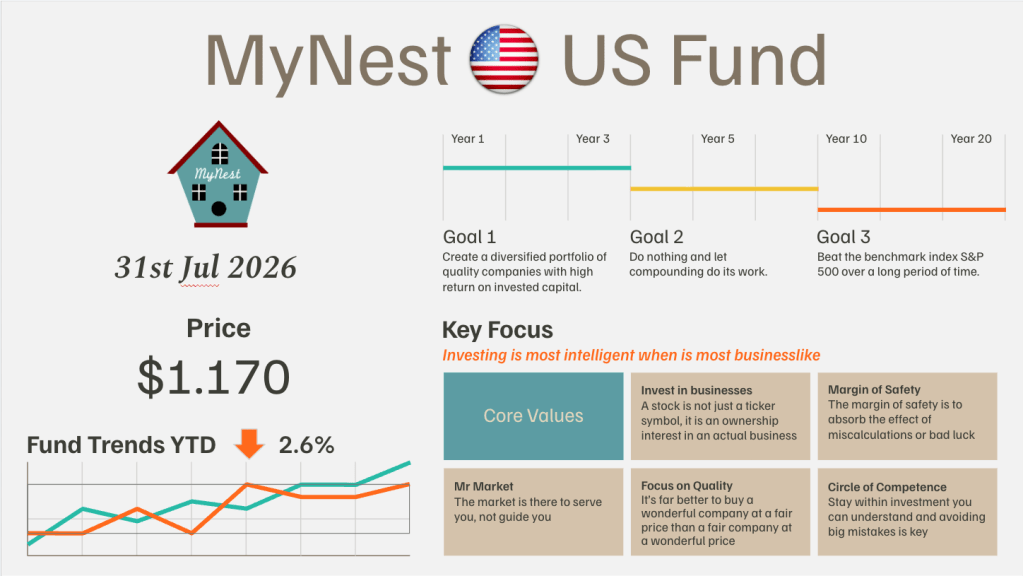
MyNest US Fund Jul 26
After spending a long period watching the artificial intelligence infrastructure build-out from the sidelines, we finally decided to join the party—albeit cautiously.


One response to “Haw Par the well know value trap?”
[…] A new addition was made to the SRS Fund in Feb as I invested in Haw Par healthcare business and also UOB indirectly via their investment portfolio. A post written on the investment can be reached at the following link. https://mynest.sg/2024/03/01/haw-par-the-well-know-value-trap/ […]
LikeLike